Three Key Takeaways From The Chronicle of Higher Education Leadership Summit
Higher education has become remarkably good at identifying the challenges threatening its future. Whether institutions are equally prepared to make the difficult decisions required to address them is another question.
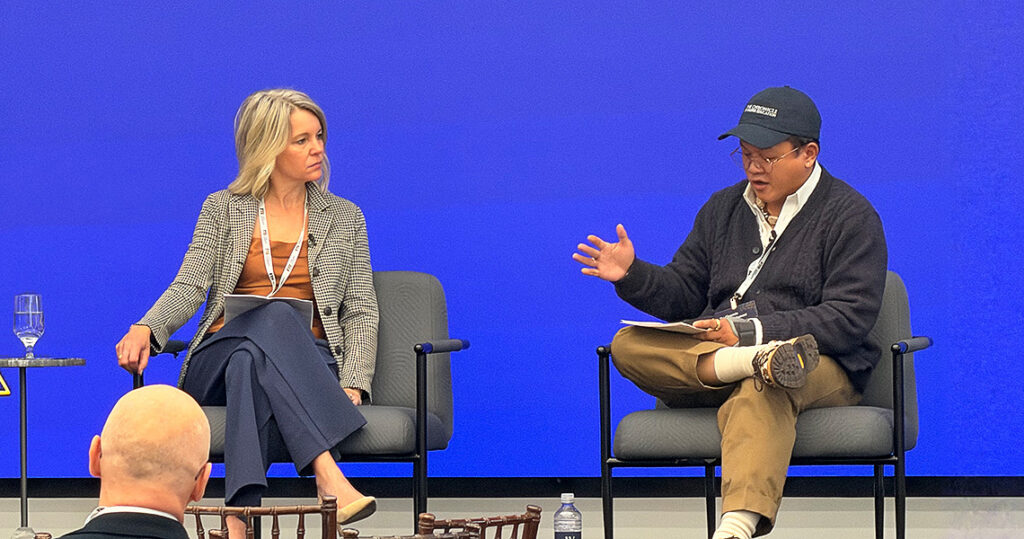
That tension surfaced repeatedly during The Chronicle of Higher Education’s Leadership Summit in Washington, D.C., where presidents and other senior leaders gathered to confront some of the sector’s most pressing issues.
Declining public trust, financial pressures, faculty burnout, and artificial intelligence dominated much of the conversation. Yet beneath these familiar challenges was a more pressing question: Are colleges and universities prepared to fundamentally rethink how they operate, or will they continue addressing increasingly complex challenges within institutional structures that weren’t designed to handle them?
E. Gordon Gee, president emeritus of West Virginia University, captured the urgency during his remarks on presidential leadership. He argued that university presidents must become architects of change or risk becoming victims of it.
It’s a compelling challenge, particularly for a sector where consensus-building can sometimes come at the expense of decisive action.
After two days of discussions, three themes stood out to me, each with significant implications for how institutions protect revenue, manage costs, and approach modernization.
1. Institutions may be overlooking a major revenue opportunity: the students they already have
There was considerable discussion about higher education’s credibility problem, and for good reason. Public skepticism about the value of a degree continues to challenge institutions already confronting demographic headwinds and growing financial uncertainty.
What’s interesting is how much of that credibility problem is shaped by experiences entirely within an institution’s control.
During the Reporters’ Roundtable, the conversation turned to familiar student frustrations: difficulty scheduling an advising appointment, receiving inaccurate transfer guidance, or navigating inconsistent financial aid information.
These examples probably won’t surprise anyone working in higher education. That’s precisely what makes them concerning.
We’ve become so accustomed to the friction embedded in the student experience that it’s easy to underestimate its cumulative impact. Every unnecessary hurdle has the potential to erode student confidence, interrupt momentum, or influence a decision to enroll elsewhere.
As one participant observed, word gets around.
These experiences carry real financial consequences. Institutions invest significant resources attracting prospective students, only to see some disengage because of operational barriers that could potentially be addressed. The same dynamic affects retention, where unresolved frustrations can contribute to students stopping out before completing their degrees.
The relatively optimistic outlook surrounding community colleges offered an interesting counterpoint. Despite their own financial challenges, these institutions were viewed with greater confidence, in part because of their affordability, accessibility, and ability to build authentic relationships with students and the communities they serve.
That connection between institutional trust and student experience deserves more attention.
There was also discussion about the need for colleges and universities to diversify their revenue streams beyond tuition, an increasingly important strategic priority. But before chasing the next source of growth, institutional leaders should take a hard look at how effectively they’re converting existing student interest into enrollment and supporting students through completion.
Some of higher education’s most immediate revenue opportunities may already exist within its current enrollment funnel and student population. Capitalizing on them requires an honest look at where institutional processes are failing the very students they’re meant to serve.
2. The pressure to do more with less is exposing the limits of institutional efficiency
Faculty and staff exhaustion emerged as one of the more troubling themes of the summit.
The Chronicle’s 2025 workforce survey, which gathered responses from 2,328 higher education employees, found that 48% were less satisfied with their jobs than a year earlier. Among faculty, that figure reached 52%.
The Reporters’ Roundtable added important context to those findings.
Faculty remain deeply committed to teaching and research, the work that drew many to higher education in the first place. But growing administrative demands, financial pressures, and the challenges of integrating AI into the classroom are stretching them thin.
Another discussion raised a related issue: Institutions are pursuing physical and geographic expansion without adequately accounting for the operational demands placed on existing teams.
It’s a familiar institutional dilemma. Leaders are expected to demonstrate fiscal discipline while expanding services, supporting increasingly complex student needs, and maintaining academic quality. But institutions can only take on so much additional work for already-stretched employees.
If an institution’s cost-containment strategy depends primarily on asking its people to absorb more responsibilities, it may be creating operational risks that aren’t immediately visible on the balance sheet. This raises a more fundamental question about how colleges and universities approach financial sustainability.
How much institutional spending is tied to fragmented processes, duplicated administrative work, or technology environments that require significant manual intervention? How much staff capacity is consumed navigating organizational complexity that institutions have gradually accepted as unavoidable?
Addressing those questions requires looking across the enterprise rather than evaluating departments in isolation.
Howard Teibel’s discussion about rebuilding institutional trust through shared commitments reinforced an important reality: Meaningful operational change depends on people understanding why decisions are being made and having a stake in the outcomes.
For institutions facing financial pressure, the opportunity is to rethink how work gets done so that resources can be redirected toward activities that strengthen institutional performance.
The question for presidents and CFOs is whether their cost-reduction efforts are actually making the institution more efficient or simply making an already exhausted workforce work harder.
3. AI is exposing higher education’s deeper problem with innovation
Artificial intelligence was woven throughout the summit, particularly in conversations about academic integrity, teaching effectiveness, and the future value of a college education. One of the more revealing observations came during the Reporters’ Roundtable, where the evolution of institutional AI adoption was discussed.
The first phase largely focused on giving faculty and staff access to AI tools in controlled environments. Institutions established guardrails, introduced platforms, and left individuals to determine how the technology fit into their work.
The results (at least from the experiences described) have been uneven.
Faculty are spending considerable time policing AI-generated assignments while wrestling with a much more consequential question: How can students learn to use these tools productively without outsourcing the critical thinking that higher education is supposed to develop?
The emerging second phase appears more promising, with institutions beginning to approach AI adoption collectively at the program and departmental levels. That shift matters because the challenges AI presents extend well beyond individual productivity.
One summit observation captured the danger of allowing technology to drive institutional priorities: “AI becomes the hammer, everything starts looking like a nail.”
There’s a broader lesson here about higher education’s capacity for innovation.
During an attendee discussion, someone described innovation as one of the sector’s Achilles’ heels. The underlying concern was particularly insightful: Institutions often spend considerable time debating what they should innovate without giving enough attention to how they can build a culture of sustained innovation.
That distinction reveals an uncomfortable truth. Higher education has invested heavily in technology over the years, yet many institutions still struggle with disconnected systems, fragmented data, and organizational structures that make meaningful change difficult.
The challenge becomes even more pronounced when experimentation carries reputational risks, internal stakeholders have competing priorities, and decisions require navigating layers of institutional governance.
Modernization demands leadership willing to confront those barriers. Before adopting another AI platform or launching another technology initiative, institutions need to be clear about the outcomes they’re trying to achieve and whether their existing operating models can support them.
That requires stronger systems thinking, greater collaboration across academic and administrative functions, and a willingness to reconsider processes that may have served institutions well historically but are increasingly misaligned with current needs.
AI may ultimately be a powerful catalyst for institutional transformation. But its impact will depend on whether higher education can develop the organizational capacity to innovate at the same pace as the technology itself.
The leadership challenge ahead
One observation from the summit has stayed with me: Problems can be solved, but dilemmas have to be managed.
Higher education faces no shortage of dilemmas. Institutions must generate revenue while preserving access and affordability, control costs while supporting overextended employees, and embrace technologies that are reshaping how students learn and institutions operate.
There are no one-size-fits-all solutions. Each institution must navigate these challenges based on its mission, market position, and financial realities. Making meaningful progress will require leaders to think and operate differently.
During one discussion, a participant posed a question that captures this challenge: How can institutions remain individually distinctive while becoming collectively stronger?
The answer requires leaders to look beyond traditional ways of operating, embrace new perspectives, and make difficult but necessary decisions. It also reinforces Gee’s call for university presidents to become architects of change.
Higher education doesn’t lack ideas about what needs to change. The real challenge is building institutions capable of turning those ideas into action.
That may be the defining test of higher education leadership in the years ahead.
Innovation Starts Here
Higher ed is evolving — don’t get left behind. Explore how Collegis can help your institution thrive.